
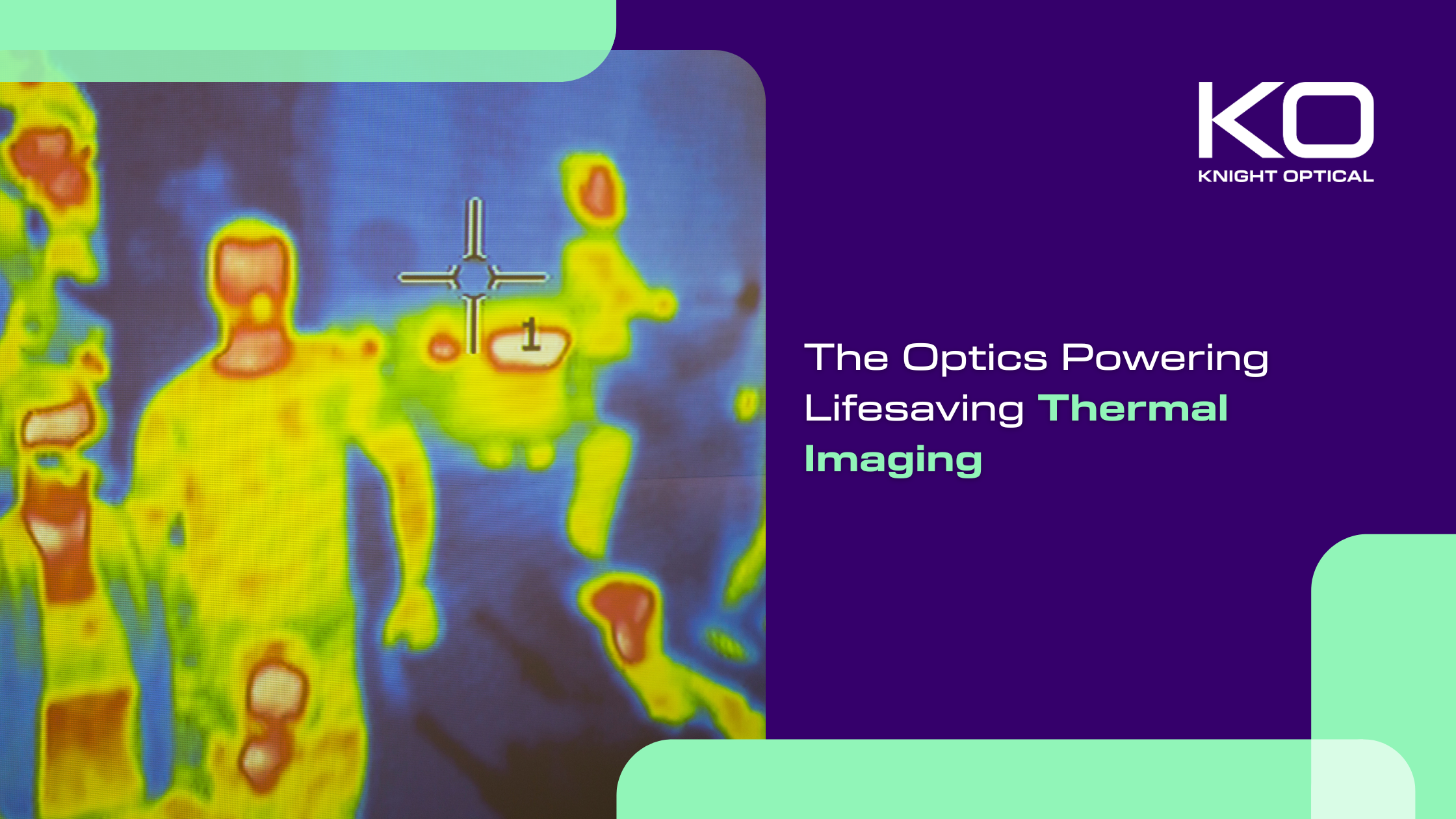
The capabilities of thermal imaging extend far beyond night vision technology for military use. Working from infrared energy, thermal imaging cameras are utilised in building inspections, wildlife conservation and are even on the front line in the fire service, saving lives. In this guide, Knight Optical examines how thermal cameras are aiding in rescue and security operations and covers the optics used in such applications.
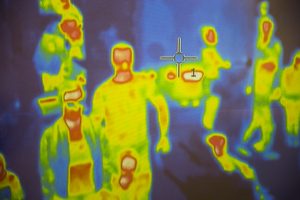
When a firefighter walks into a smoke-filled building, visibility drops to zero. Near-total darkness and thick smoke make missions incredibly dangerous, which is why fire services regularly rely on infrared technology to see in environments where their eyes completely fail. In these instances, thermal imaging cameras register infrared radiation and turn heat signatures into clear visuals of people, hot spots and structural dangers. This means firefighters can act accordingly, choosing safer routes, avoiding zones prone to collapse and finding individuals who need rescuing.
They’ve become vital in high-security contexts, too. Often employed for 24/7 site surveillance at data centres, power plants, airports and telecoms sites, thermal cameras are favoured for three main factors: their capability to see in the dark, their long-range detection and their ability to see through obstacles like fog and mist.
How Thermal Imaging Works
Thermal cameras enable us to see the heat that isn’t detectable by the naked eye. Everything surrounding us emits infrared radiation, and these purpose-built instruments are able to register this. Unlike standard cameras, which capture visible light, the thermal sensitivity of these models relies on optical components – like infrared lenses, specialised filters and protective windows – to identify heat signatures and convert them into imagery. In these pictures, warmer areas are displayed brighter or lighter (yellow or red), while cooler parts appear as darker colours like blue or purple.
Different camera types look at various bands of the infrared spectrum. For example, mid-wave infrared (MWIR) is commonly employed to spot very hot objects, such as flames and exhaust gases, whereas long-wave infrared (LWIR) is better suited to objects like humans, buildings and animals.
Thermal Imaging in Fire Services
In fire response scenarios, LWIR is generally the wavelength of choice. While MWIR can detect fires, LWIR helps responders to find their way around when they’re in the heart of a blaze. At this point, they don’t need to know where the fire is; they must accurately identify survivors and establish safe pathways. Because LWIR penetrates smoke more reliably than MWIR – where smoke particles scatter and prevent visuals from forming clearly – it’s widely adopted for thermal cameras intended for such situations.
Thermal Cameras in Surveillance
For similar reasons, LWIR thermal imaging is selected for perimeter protection, too. This isn’t simply because it functions in all weather conditions, but also because it offers long-range detection and provides sharper representations of potential threats and intruders.
Optical Components for Thermal Imaging
The optical components integrated in thermal cameras are specifically designed to interact with infrared wavelengths. Specifying thermal imaging optics starts by sourcing performance-driven components for your system design.
For MWIR and LWIR platforms, these can comprise:
- Lenses: Aspheric lenses are particularly valuable in thermal imaging thanks to their capacity to minimise optical aberrations that can blur heat signatures. This is essential when identifying far-off targets or locating victims in dense smoke. Here, the correct lens design directly impacts image clarity and detection distance.
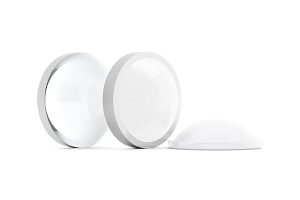
- Windows & Domes: These optics offer key protection for internal sensors. While flat windows are often used when a thermal imaging device has a fixed field of view – such as within handheld firefighting thermal imagers – domes are usually preferred for surveillance devices where cameras need to pan and tilt.
- Beamsplitters & Prisms: Folding optical paths and, as the name suggests, splitting beams, beamsplitters and prisms are integrated to manipulate and direct infrared radiation. In thermal imaging, they usually allow systems to combine multiple images, analyse thermal energy at various wavelengths and help create compact designs.
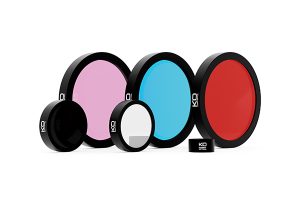 Bandpass Filters: By isolating specific MWIR and LWIR wavelengths and blocking others, these filters ensure that thermal imagers solely capture relevant heat signatures. It’s this selectivity that allows thermal cameras to improve contrast, reduce noise and depict accurate temperature differences in imagery.
Optical Materials for Thermal Imaging Cameras
Picking the right optics for a thermal imager involves more than just component type. Engineers, designers and specifiers also must bear in mind environmental durability, optimal substrate selection, aberration control and project-specific optical coating requirements.
Germanium has long been the go-to for many thermal imaging cameras, however, it’s far from the only option.
Alternatives include:
- Zinc Selenide: Known for excellent transmission in MWIR and LWIR thermal imaging cameras, this substrate performs well as protective windows or lenses.
- Zinc Sulphide: Tough and chemically resistant, Zinc Sulphide is recognised for its ability to transmit infrared radiation effectively while withstanding physical impacts.
- Sapphire: Sapphire’s infrared transmission is typically stronger at shorter wavelengths, however, being exceptionally hard and scratch resistant, it’s a popular window choice for extreme-environment applications.
- Calcium Fluoride: Providing strong MWIR transmission and low absorption, calcium fluoride is commonly used in multi-lens setups.
To discuss custom optical components for your thermal imaging application or to learn more about our material options, contact us today.