

Optical filters play a key role in the performance of modern-day machine vision systems. Without them, defective blister packs in the pharmaceutical industry risk being delivered to patients, contaminants in food and drink could go undetected and faulty weld seams in automotive manufacturing might slip through unchecked. It’s the selective properties of bandpass filters that help prevent these scenarios. Here, we explain how.

Today’s warehouses are fast-paced facilities. Amid labour shortages, rapid growth, and the mounting pressure to reduce mistakes and increase throughput, technology has stepped in to support production lines in keeping pace, with machine vision – often combining deep learning algorithms with high-spec camera systems – proving especially valuable. In fact, Gartner predicts that by 2027, 50% of warehouse operations will employ AI-enabled vision systems to replace more traditional scanning methods.
At the heart of these setups, machine vision filters – specifically bandpass filters – work to overcome obstacles such as lighting variables while maintaining the speed and accuracy demanded from automated optical inspection (AOI) technology. This enables reliable flaw and object detection, ensuring items under review achieve expected production standards.
The Challenge of Consistent Automated Optical Inspection (AOI)
This form of industrial automation requires the integration of high-precision optical components for accurate image analysis. Factors like natural light changing throughout the day, harsh ceiling-mounted industrial lighting and reflective surfaces all have a big impact on a camera’s ability to see and, therefore, operate effectively. Such noise can cause issues like inconsistent results, missed defects, chromatic aberration and colour mismatches, which in fields like food sorting – where the margin for error is slim – can lead to serious consequences. Alongside errors, unfavourable conditions can also prove costly, with equipment working considerably slower as it struggles to make decisions, and a sharp rise in false rejects where non-defective products are unnecessarily discarded.
How Bandpass Filters Help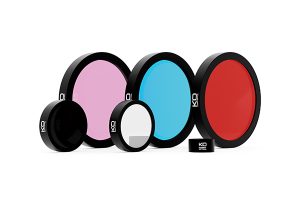
Interference bandpass filters are integrated into these systems to directly address such challenges. Thanks to their engineering, spectral filtering allows only certain bands to reach machine vision sensors, rejecting ambient light (including white light emitted by overhead sources) that would otherwise interfere with the equipment’s readings. This maximises the contrast of the item undergoing examination, improving accuracy and helping individual features stand out more clearly; for example, a setup that distinguishes red caps from blue ones on a bottle line.
The type of filter chosen depends on the requirements of your machine vision system. All bandpass filters function by transmitting a specific wavelength range while blocking everything else, but the bandwidth and spectral window vary depending on the filter design:
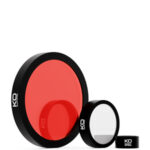
- Broadband: Passes a wider wavelength range, making them particularly beneficial in general quality control applications where more light is needed
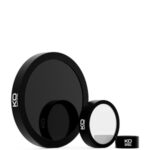
- Narrowband: Passes a much tighter band, meaning they’re better suited to demanding conditions with higher levels of ambient light interference
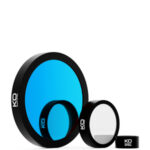
- Standard: Matched to common LED wavelengths, they’re a versatile choice for most machine vision systems
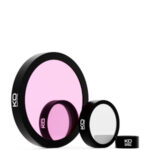
- UV: Operates in the ultraviolet (UV) spectrum, ideal for detecting fluorescence and coating layers that are invisible to the naked eye.
That said, bandpass filters aren’t always used independently. In some cases, neutral-density and polarising filters are also employed to complement setups, reducing glare and further controlling light intensity.
Knight Optical’s Interference Bandpass Filters for Machine Vision Systems
Our coated interference filters are designed to meet the demands of machine vision and visual inspection systems that serve a wide range of industries and environments. To find the right optical filter for your application, get in touch with a member of our team today.