

Though it may seem like an emerging innovation, LiDAR has actually been in use for decades. But gone are the days of the large, bulky and cumbersome instruments of the 1960s. Current LiDAR designs are sleeker, smaller and more efficient, with advances in optical components playing a crucial part in these developments. Here, Knight Optical explores the implementations of LiDAR and examines the optical components that make it all possible.

The global LiDAR market is predicted to increase from $2.89bn (USD) in 2025 to approximately $15.83bn (USD) by 2034. Having filtered down from industrial-scale deployments to the everyday uses – from the smartphones we keep in our pockets to the vehicles we park on our drive – this explosive predicted growth accurately reflects LiDAR’s increasing accessibility. Designers and engineers favour the light-based solution for its exceptional accuracy, high resolution and speed – and it’s these very qualities that have boosted its widespread adoption.
How LiDAR Works
LiDAR – or to give its full name, light detection and ranging – is a laser-powered technique. It performs by emitting laser light and measuring how long it takes every pulse to reflect off the objects around it, known as time of flight (ToF). When the emitted pulse is reflected, optical receivers collect the laser light and generate accurate 3D maps of the system’s environment, such as those in autonomous vehicles. Timing differences of nanoseconds or picoseconds make all the difference here, and optical receivers need to be sensitive enough to pick up the faintest signals. To do so, they typically function in tandem with optical filters to block unwanted wavelengths and optimise precision.
In contrast to camera platforms that usually depend on existing light, LiDAR’s laser source means it creates its own light and can therefore perform consistently in many scenarios. Different applications operate at alternative wavelengths in the ultraviolet (UV), visible and infrared (IR) spectrums, and specifications are highly dependent on the device’s purpose and targeted needs. For instance, in self-driving cars, common wavelengths are 905 or 1550nm, while for larger-scale, more commercial fields, 355, 532 and 1064nm are frequently utilised.
Different Types of LiDAR
LiDAR isn’t a one-size-fits-all method. It comes in various forms, with each one offering strengths that suit deployments, including:
- Mechanical Scanning LiDAR: A more conventional type of LiDAR, this method uses a rotating component, like a mirror, to direct its laser beam and map its environment.
- Flash LiDAR: Unlike scanning systems, flash LiDAR operates by illuminating its surroundings with a single, wider laser pulse to capture an entire field of view at once.
- Optical Phased Array LiDAR: A newer form of LiDAR, Optical Phased Array (OPA) LiDAR leverages solid-state approaches with an electronic beam steering unit, rather than rotating or mechanical components.
Typical LiDAR Applications
While many associate it with modern-day vehicle tech, LiDAR has benefits that reach far beyond the motoring world.
Military, Defence & Aerospace
From flash LiDAR for autonomous safe landing and spacecraft proximity operation in space to MEMS LiDAR (micro-electro-mechanical systems) for battlefield mapping, autonomous navigation and target identification, the tech also plays a key part in military operations and the space sector.
Construction & Infrastructure
Helping to construct the smart cities of the future, terrestrial and aerial LiDAR are often adopted in combination to help build comprehensive scans of defined areas and broader spans of land for creating new towns and urban environments.
Archaeology
In this field, non-invasive techniques are imperative. As such, LiDAR has emerged as one of the most widely used technologies in archaeological documentation in recent years, particularly airborne variations.
Disaster Management
From floods and wildfires to the structural integrity of buildings, LiDAR can create richly detailed Digital Elevation Models (DEMs) and Digital Terrain Models (DTMs) to locate flood zones, predict wildfire behaviour and identify vulnerabilities in essential infrastructure.
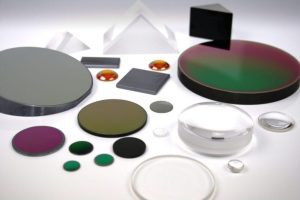 The Optical Heart of LiDAR
Optical components are integral for shaping and guiding the laser source in these setups. At Knight Optical, we supply the precision LiDAR optics that allow devices to achieve the accuracy and reliability today’s applications demand.
Optical filters – perhaps one of the most specified components for LiDAR systems – are critical for blocking unwanted wavelengths and ensuring the light that reaches the device is wavelength-specific. This selective filtering eliminates interference and improves signal quality.
Meanwhile, lenses play a dual role in LiDAR technologies. A collimating lens shapes the diverging laser beam into a tight, parallel output, while focusing varieties concentrate returning light onto optical receivers.
Protective windows are then employed to protect internal elements from harm and degradation. Shielding delicate parts from things such as dust, moisture and physical impact, windows must maintain optical clarity while standing up to harsh environmental conditions.
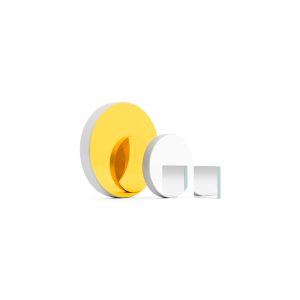 Lastly, mirrors, beamsplitters and prisms control the laser beam’s path within the system itself. Front-surface mirrors enable precise beam steering, while prisms redirect and fold light, and beamsplitters divide light between distinct optical paths – for example, separating outgoing and incoming light or directing it to multiple detectors.
For further details on our metrology-tested LiDAR optical components or to learn more about our custom-made optics, get in touch with a member of the team today.