
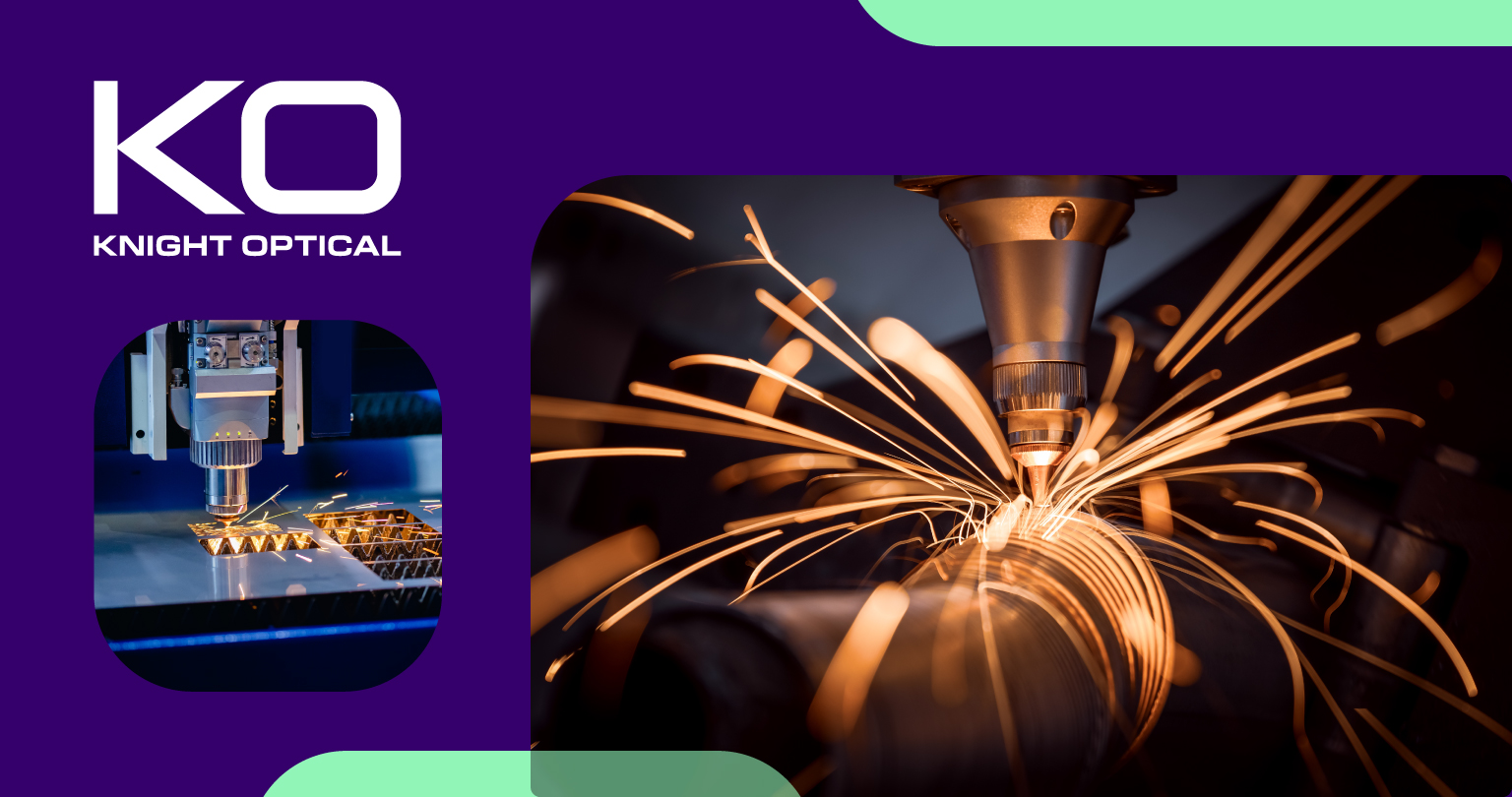
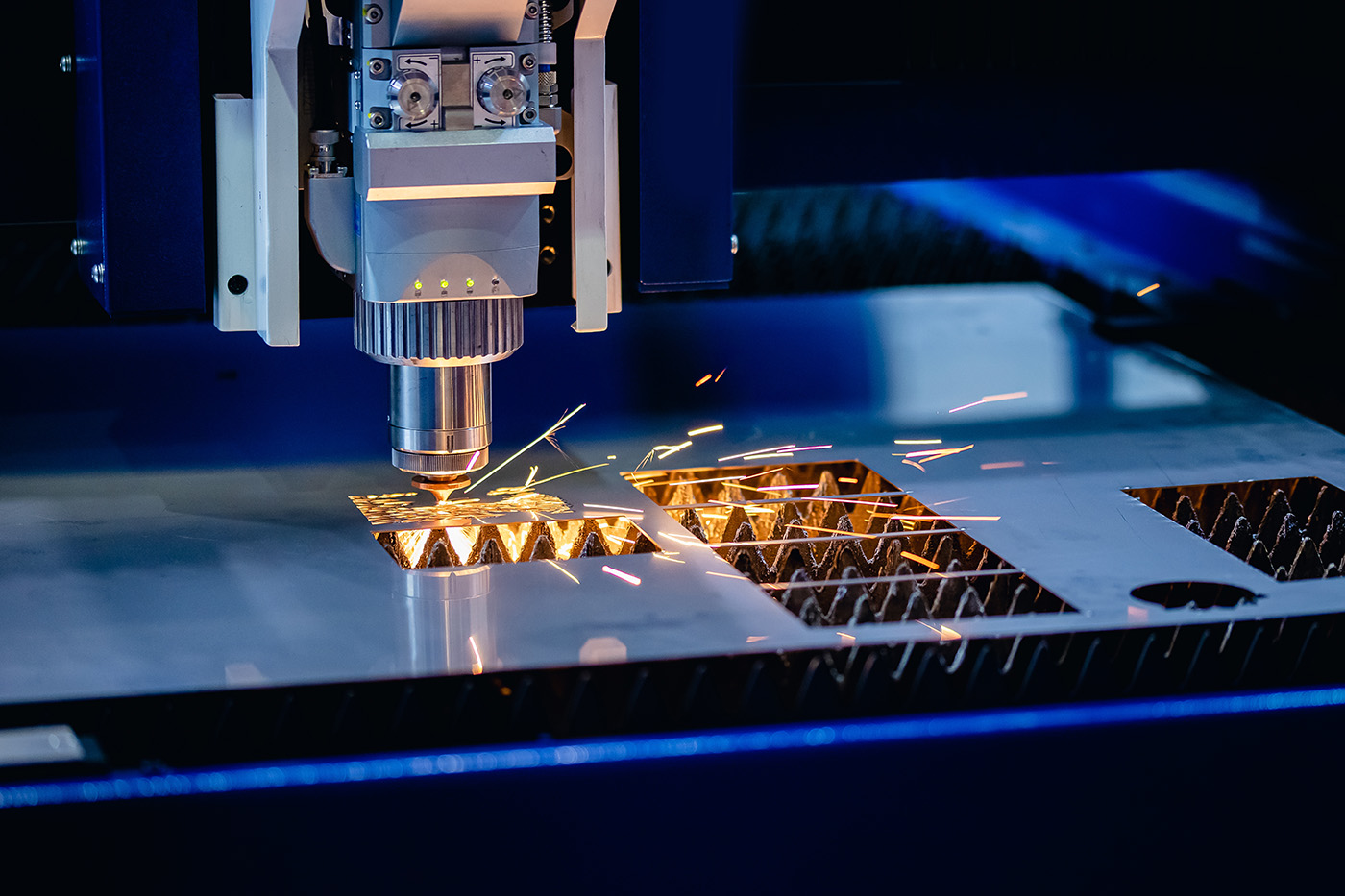
Once a staple of sci-fi blockbusters like Star Wars and Tron, lasers are now a vital force across real-life industries. Healthcare, manufacturing, and telecoms are the sectors most commonly associated with the technology. However, the list of adopters is rapidly expanding. In this blog, we explore how lasers are gaining ground in emerging applications, how established domains are pushing the boundaries, and the laser optics driving their breakthroughs.
The global laser market is predicted to climb to $30.4bn by 2029. That growth comes as no surprise. Lasers are everywhere. They’re floating above our heads in satellite networks like Elon Musk’s Starlink and Jeff Bezos’ Kuiper, facilitating satellite-to-satellite information transfer via optical laser-based inter-satellite links (OISLs). While here on Earth, they’re performing delicate surgeries with sub-millimetre accuracy and even helping cool down overheating computer chips in today’s hard-working, ever-sprawling data centres.
The potential for innovation is vast, and engineers know it. As a result, we’re not just witnessing laser technology branching out into new fields but also reaching new frontiers in existing markets.
Defence & Military
As an optical component provider for defence and aerospace purposes, we’ve seen a steady procurement of optics for laser-based instruments for some time – particularly infrared (IR)-operated tools with Germanium, Zinc Selenide (ZnSe), and Sapphire serving as popular materials. So, while it’s not necessarily a new system for this arena, it’s the uptake that’s accelerating.
The British Army is a prime example. In 2025, it’s stepped up its implementation of lasers, deploying them into their frontline, with setups expected to enter service onboard Royal Navy ships by 2027. Laser-mounted weapons for land vehicles are also being fast-tracked, thanks to their ability to intercept drones and other airborne threats with razor-sharp precision. And, the Ministry of Defence (MoD) has also disclosed £1bn of funding for laser weapon systems over the next five years.
Naturally, with this increase, we’re set to see an even greater call for optical solutions for lasers for armed forces. And with that spike comes risk. Less experienced suppliers may cut corners or supply components that fall short in the field. That’s why it’s essential to procure through an optics partner that works to recognised defence standards – such as military specification, MIL-SPEC, and First Article Inspection Reporting (FAIR) – to confirm quality, compliance, and resilience – even in the face of escalating demand.
Aerospace Manufacturing
In the UK’s strive for net-zero, all trades are seeking sustainable practices, and the aerospace arena is no exception. With a £250m clean-tech investment announced at this year’s Paris Airshow – covering zero-emission flying, laser-beam manufacturing, and minimising aircraft drag – laser technologies are now firmly part of the air travel green transition.
Because of its accurate assembly, lasers can also help lower the carbon footprint of manufacturing processes by significantly reducing material waste. What’s more, their contactless nature often results in fewer emissions compared to traditional friction-based techniques. It’s for these reasons we regularly see them employed to manufacture everything from cars and medical devices to consumer electronics.
Behind the scenes, optics need to stand up to these demanding functions. Laser mirrors, beamsplitters, and lenses must all endure high repetition rates and thermal stress. To do so, they normally incorporate specialist substrates and optical coatings – such as anti-reflective (AR), oleophobic, and hydrophobic layers – to ensure long-term efficiency and longevity.
Battery & EV Manufacturing
With electric vehicle (EV) sales rising, the UK government’s Zero Emission Vehicle (ZEV) mandate in place, and billion-pound investments being poured into giga factories for EV battery production, the stage is set for a laser-driven revolution.
At leading trade shows like Battery Show Europe, we’re seeing a rise in automated laser-welding configurations and remote processing heads engineered precisely for EV battery packs. These advanced solutions enable high-speed and -precision welding on parts like busbars, cooling plates, and electrodes, supporting safe, consistent workflows at scale.
Optics are at the heart of industrial lasers like these. Here, lenses modify the shape and intensity of a laser beam to match the task, while high-durability windows and mirrors– much like those used in laser-based aerospace manufacturing – are specifically designed to withstand extreme thermal load and repeated operational cycles.
Optics at the Core of Laser Tech
Whether it’s enabling cleaner air travel, strengthening military capabilities, or fuelling the shift to electric mobility, laser technology is powering advancements, and even empowering us to build next-generation devices. But without precision optics, that level of output and pace simply wouldn’t be possible.
These high-spec components focus, shape, and direct laser beams with pinpoint accuracy. From materials to coatings, every detail matters. This underlines the importance of sourcing from a trusted optics supplier – one that understands the unique demands of each application and industry, and can deliver the reliability and performance needed to keep progress moving.
To learn more about our optical components for laser systems, get in touch with a member of the team today.