
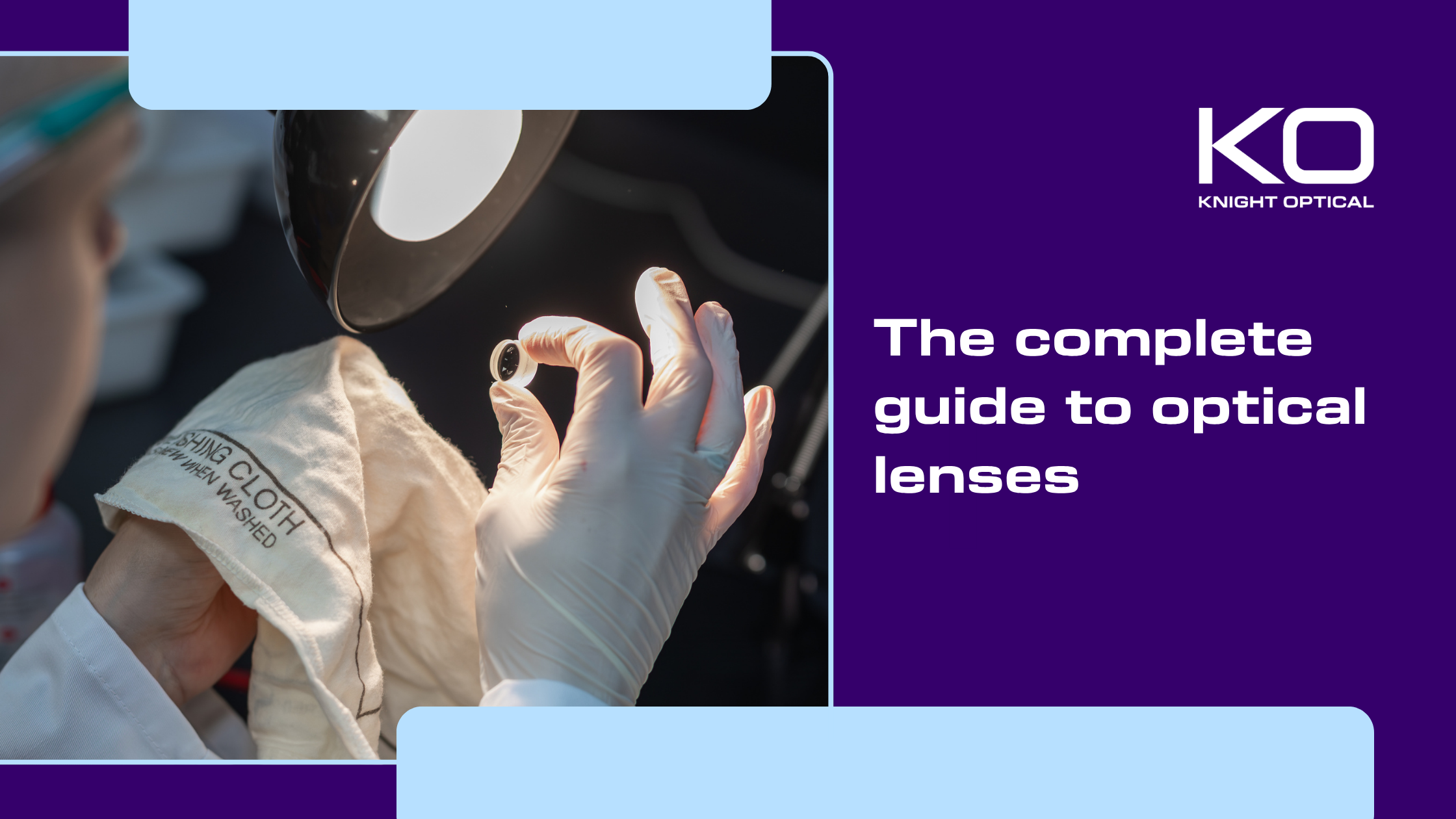

The complete guide to optical lenses
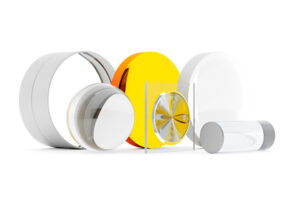 Optical lenses sit at the heart of precision machine vision, photonic and sensor instrumentation, but the type, material and coating all affect how a system performs, including transmission and longevity. This guide walks through how to specify the right lens for your application, from basic shape through to final tolerance grade.
Optical lenses refract incoming light to either focus it to a point or spread it out, but how they do this depends on their design. In industrial settings, poorly specified lenses can produce blurred images, unreliable inspection data, distorted beams and weak or noisy signals. Getting this right starts with the lens shape.
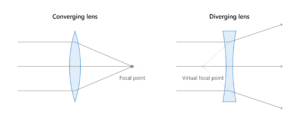
How lens shape controls the direction of light
Lens type and what they do
The most common lens configurations are:
- Planoconvex: flat on one side, domed on the other – focuses light
- Planoconcave: flat on one side, hollowed on the other – spreads light
- Biconvex: domed on both sides – converges light over short distances
- Biconcave: hollowed on both sides – stronger divergence
- Meniscus: domed on one surface, hollow on the other – focuses or spreads light dependent on the orientation but can also minimise some spherical distortion
Alternative shapes compensate for optical errors or manipulate light in specific ways.
These include:
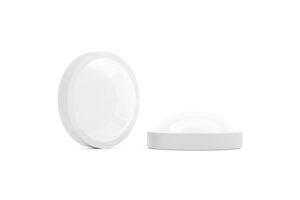
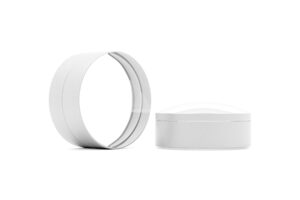
Aspheric lenses
In aspheres, the surface isn’t a perfect section of a sphere. This profile corrects spherical aberration, introduced when a spherical surface focuses rays at slightly different points depending on where they strike the lens. Because aspheric lenses can perform the function of several conventional lenses in one element, they help keep assemblies smaller and lighter.
 Achromatic doublets
Two different glasses (typically a high-index flint and a low-index crown) are cemented together to correct chromatic aberration, where different wavelengths of light focus at different points because refractive index varies with wavelength.
The doublet is calculated to bring two chosen wavelengths (e.g. red and blue) to the same focus. Where three colours need correcting, an apochromatic triplet is used instead.
 Cylindrical lenses
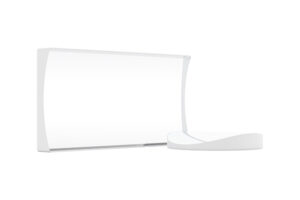
Curved along one axis only, cylindrical lenses focus light into a straight line rather than a single point, so they’re often used to change the profile of laser beams. For example, to correct for astigmatism and ellipticity in diode lasers or to generate lines from single mode lasers.
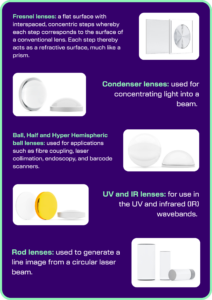
Other specialist geometries include:
Lens materials
Every substrate transmits a distinct region of the spectrum, so material choice should follow the operating wavelength and environment:
- N-BK7 (or equivalent): the most popular choice for visible (VIS) and near-infrared (NIR) work, roughly 350–2100 nm, offering consistent quality and cost-effective polishing.
- Fused silica: transmits into the deep ultraviolet (UV), roughly 185–2500 nm, with very low thermal expansion. It is used where lenses must stay stable through temperature swings, such as laser and UV applications.
- Sapphire: extremely hard and scratch-resistant, transmitting from around 150 nm to 5 µm. It is often chosen for instruments exposed to harsh environments.
- Silicon, chalcogenide, zinc sulfide and zinc selenide: well suited to infrared transmission bands (silicon roughly 1.2-8 µm, zinc selenide roughly 0.6 – 20 µm). These materials are standard choices for thermal imaging and sensing.
Optical coatings and wavelength optimisation
Each uncoated glass surface reflects roughly 4% of the light hitting it, and that loss stacks up across multi-lens systems, cutting brightness and creating ghost images.
Anti-reflective (AR) coatings – broadband for wide spectral ranges or optimised for a single wavelength – typically bring residual reflectance per surface down below 0.5%, meaningfully improving transmission and image contrast.
For harsher conditions, durability coatings are added: diamond-like carbon (DLC) where abrasion resistance is needed, or hydrophobic coatings to repel water on optics facing weather or repeated cleaning.
We have expanded our portfolio of coating capabilities. Our coating facilities are equipped with the multiple coating chambers, including: 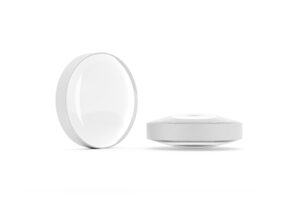
- Thermal evaporation
- E-beam evaporation
- Magnetron sputtering
- Ion beam sputtering (IBS)
Specifying a lens
A lens is never “just a lens.” The right lens can improve resolution, transmission and system performance. The wrong one can introduce aberrations, reduce image quality and limit what your optical system can achieve.
Choosing a lens is a sequence of decisions: application defines the required shape (focusing, beam-shaping, imaging), environment and operating wavelengths define the material and coating, and system performance requirements define the tolerance grade.
Typical manufacturing capability for spherical, aspheric and cylindrical lenses spans diameters from 3 mm to over 200 mm and focal lengths from 3 mm to over 1000 mm, with form error under 0.5 fringes, centration under 3 arc minutes, and scratch/dig under 60/40. Tighter grades are available where laser or high-precision imaging applications demand it.
Before specifying a lens, make sure you’ve considered:
- Focal length: Determines image size, magnification and field of view.
- Numerical aperture (NA): A key factor in light-gathering ability and resolution.
- Surface quality: Imperfections can increase scatter and reduce performance.
- Optical coating: Critical for maximising transmission and minimising unwanted reflections.
- Substrate material: Different applications require different materials, from visible to infrared and UV wavelengths.
Every optical system is a balance of trade-offs. Understanding these fundamentals can save significant time, cost and redesign effort later in the project.
Stock and custom optical lenses from Knight Optical
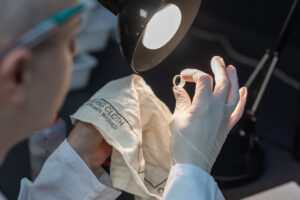
Our range spans stock lenses in standard diameters and focal lengths for fast delivery and prototyping, and custom-made lenses for bespoke geometries, substrates and coatings.
Every lens is tested in our in-house metrology laboratory (including a Zygo Verifire interferometer for form and transmitted wavefront, and Trioptics OptiSpheric and OptiCentric systems for focal length and centration) and are 100% visually inspected by our quality assurance team. We work to ISO, BS and MIL standards and we are ISO14001 and ISO9001 certified.
To talk to us about the right type, material, coating and tolerance for your requirements, contact a member of our technical sales team today.