

Optical prisms are widely recognised from cultural references, such as Pink Floyd’s The Dark Side of the Moon album cover, as well as Isaac Newton’s pioneering experiments, which demonstrated that white light contains the full visible spectrum. Yet, we rarely consider how often they show up in everyday life. From the binoculars in birdwatcher’s drawers to the projector in every film buff’s living room, prisms are in action behind the scenes in more ways than you may think.
What is an Optical Prism?
Made from optical glass, such as N-BK7 or UV-fused silica, prisms are geometric components that either separate white light into its constituent wavelengths (creating the Pink Floyd-famed rainbow phenomenon), redirect light beams, or rotate images.
These effects depend on refraction and total internal reflection (TIR), which are achieved through four main types of prisms: rotation, dispersion, displacement, and deviation prisms. For engineers and designers, understanding how optical prisms work and when to use each type can have significant consequences on an application’s performance.
Beyond physics, what makes these components so valuable is their versatility. In place of multiple mirrors or complex lens configurations, a single ultra-precise prism can sometimes do the job of several optics. It’s this adaptability that has enabled engineers and designers to develop equipment that is compact and cost-effective – two qualities that make technologies more accessible for daily use.
The Power of Prisms
In a world without prisms, important tech simply wouldn’t function. Some imaging systems would display everything upside down, laser scanning couldn’t measure distances accurately, and clinicians would no longer be able to perform vital endoscopic procedures. But it’s not just professional tools that rely on prisms. They’re quietly functioning in commonplace items, too.
Entertainment & Design
The photography field is a common setting to find these optics, especially in DSLR cameras. Here, precision Penta Prisms play a key role, sitting above the mirror mechanism, so that when you look through the viewfinder system, your subject matches real-world orientation.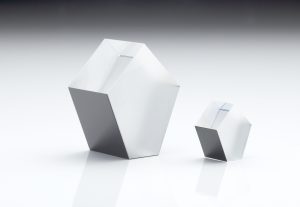
Live events, home cinemas, lectures and classroom studies benefit from the advantages of total internal reflection (TIR) prisms. A variety of TIR prisms are utilised to manage light paths, direct illumination to micro-mirror chips and keep unwanted light away from the projection lens within DLP projectors. This enables viewers to see bright, high-contrast visuals on screen.

If you’re a nature observer, they enable you to locate your favourite species, too. Porro Prisms in traditional binoculars are responsible not only for ensuring objects appear the right way up but also for generating bright, clear views, making them popular for wildlife enthusiasts.
Construction & DIY
From building sites to your personal toolbox, prisms are regularly integrated into surveying and alignment tools thanks to their ability to assist in capturing true angular and distance measurements. They’re frequently employed in commercial projects for devices such as total stations, theodolites and other level instruments.
In this context, Penta Prisms are particularly useful in laser levels because they create 90º beam deflection, helping to establish accurate horizontal and vertical planes in structural work. Meanwhile, Roof Prisms are a typical choice for correcting image orientation in theodolites and total stations.
Everyday Essentials
However, they don’t just facilitate the equipment we use for work and leisure. Prisms also support the crucial infrastructure that delivers safety, utilities and the conveniences we take for granted every day.
Robotics & Automation
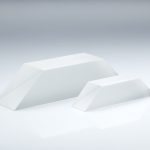
Consider your weekly food shopping, for example. Much of the fresh fruit and veg that land on your local supermarket’s shelves has been subjected to quality control checks by automated machine vision systems. Dove Prisms are known to play a key role in these solutions with their ability to flip images 180º to ensure cameras capture produce from optimal angles.
Oil & Gas
Every time you fill up your car or turn on the heating when you start feeling the chill, spectral dispersion – using prisms – has also helped to analyse crude oil and monitor refining processes to ensure you receive clean, reliable fuel.
Medical Applications
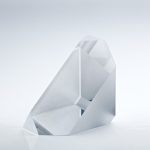
Prisms allow doctors, surgeons, and nurses to examine the inside of the body via endoscopy. Within these procedures, Roof Prisms – or Amici Prisms, as they’re otherwise known – help healthcare professionals view correctly oriented representations instead of upside-down perspectives that could result in dangerous and confusing navigation, and make diagnoses more complicated.
High-Precision Prisms
The next time you snap a family picture with your DSLR camera, watch a Christmas movie projected on a wall or spot a hawk soaring overhead using binoculars, ultra-precise prisms are operating in the background.
Whether it’s rotation prisms, dispersion prisms, displacement prisms or deviation prisms, Knight Optical supplies a wide range of stock optics in a wide range of materials and coatings to support applications with chromatic dispersion, beam steering and image correction, ultimately making these moments possible.
If you’re looking for specialist substrates and optical coatings with a higher refractive index, contact our team today to discuss your requirements.